The problem
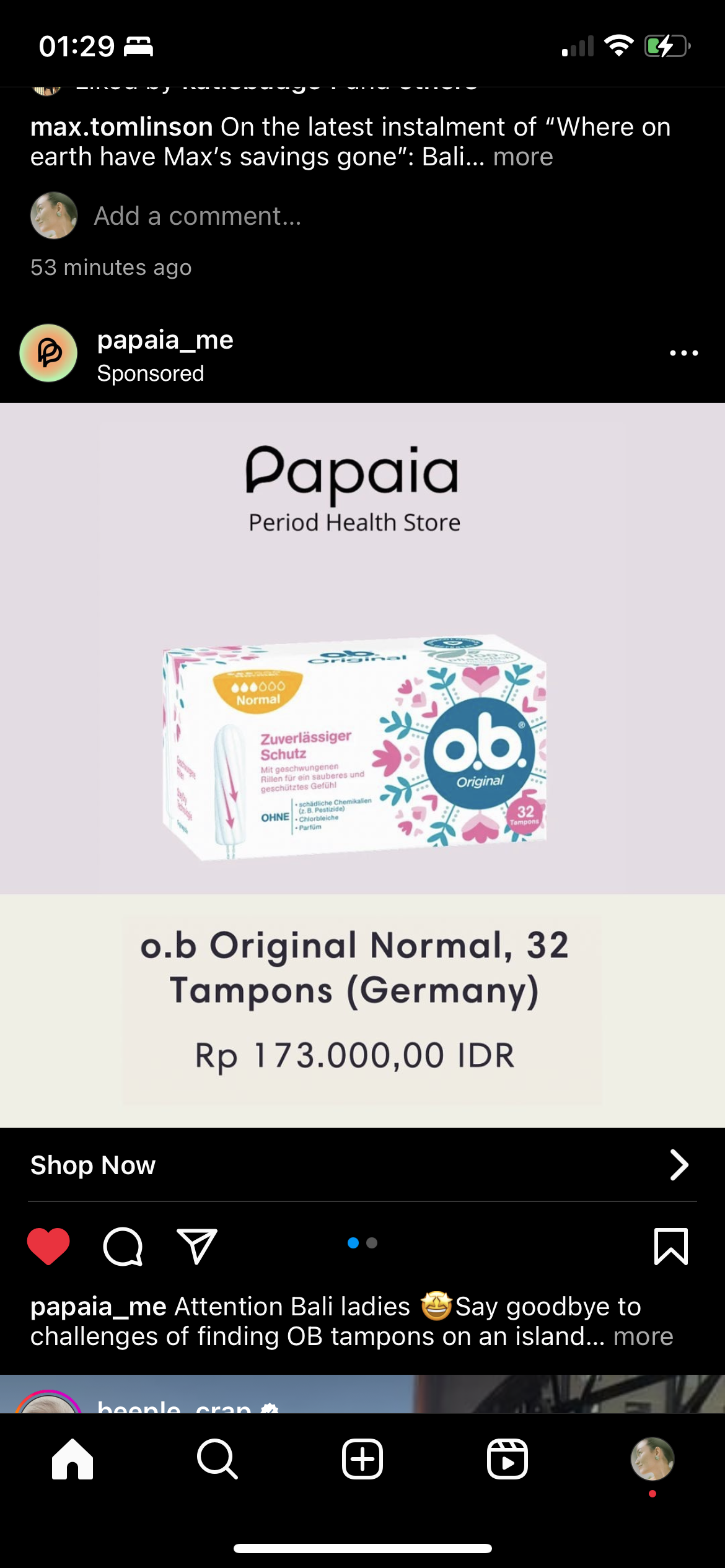
Living in Bali means good weather and bad supply chains. The brands people trusted at home — o.b., Eco by Naty, SebaMed, menstrual cups — either weren't stocked or turned up counterfeit and overpriced.
The gap wasn't awareness. It was logistics, trust, and someone willing to talk about periods out loud.
What we built
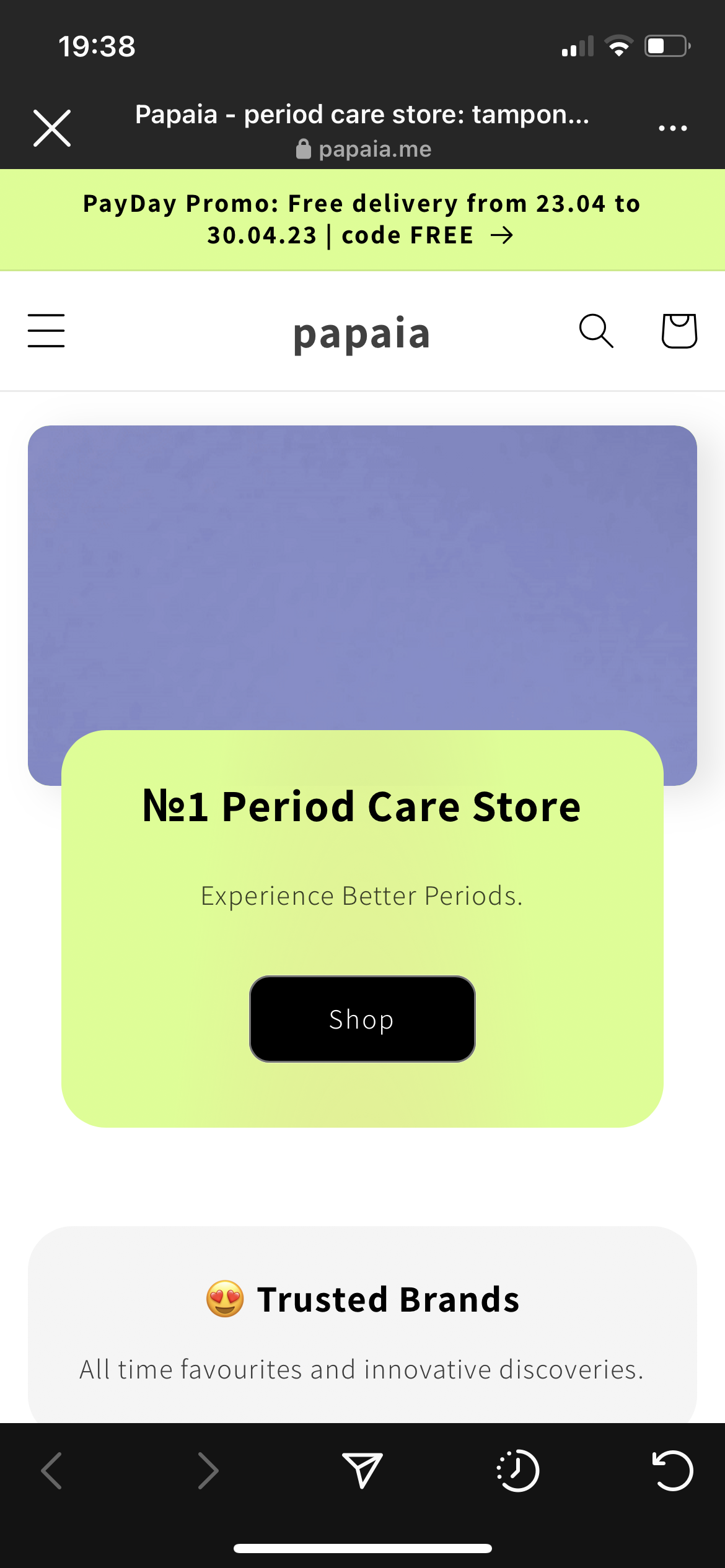
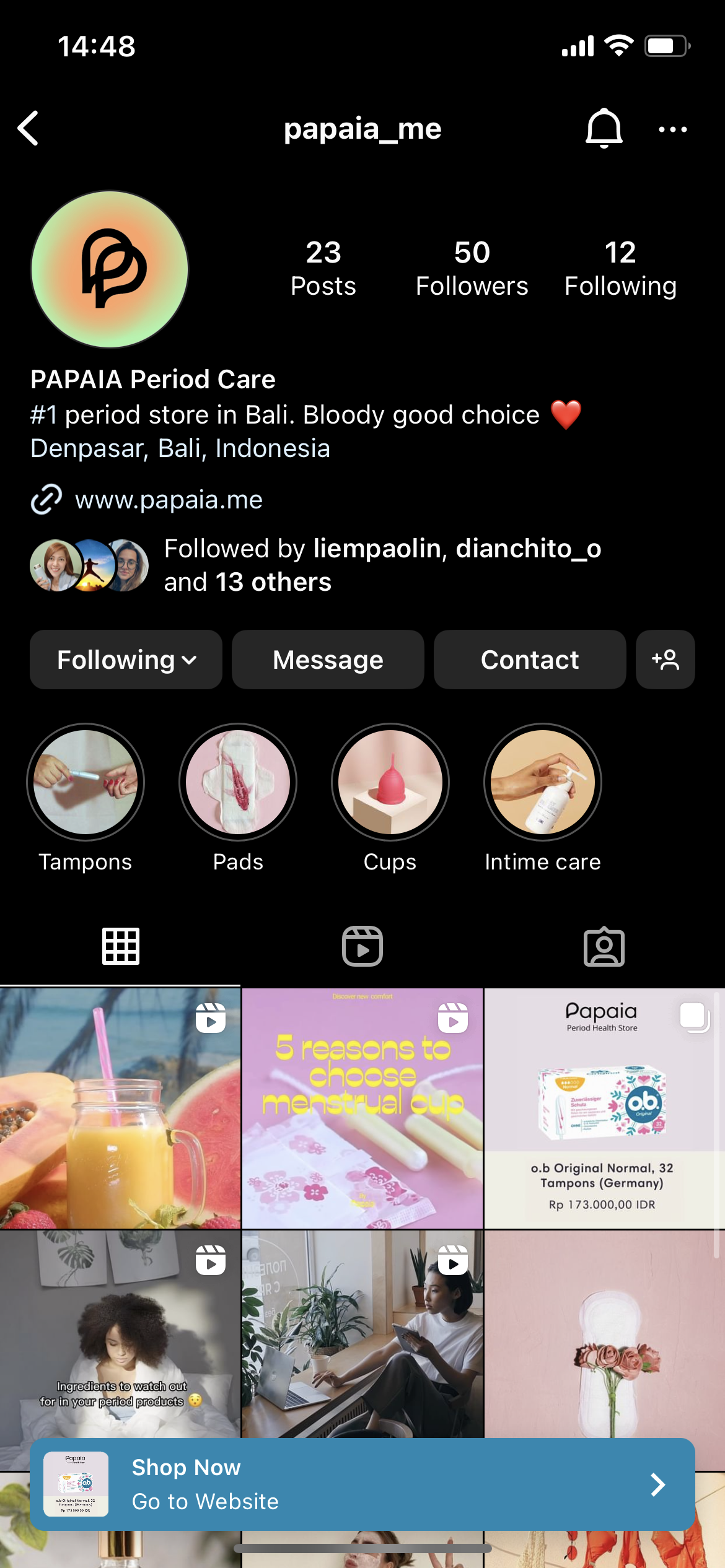
- A curated store of imported period care — tampons, pads, cups, intimate care — at papaia.me
- Same-island delivery, promo mechanics and payday campaigns
- An Instagram-first community publishing real period education, not product spam
- A physical channel: branded vending machines in bars and venues
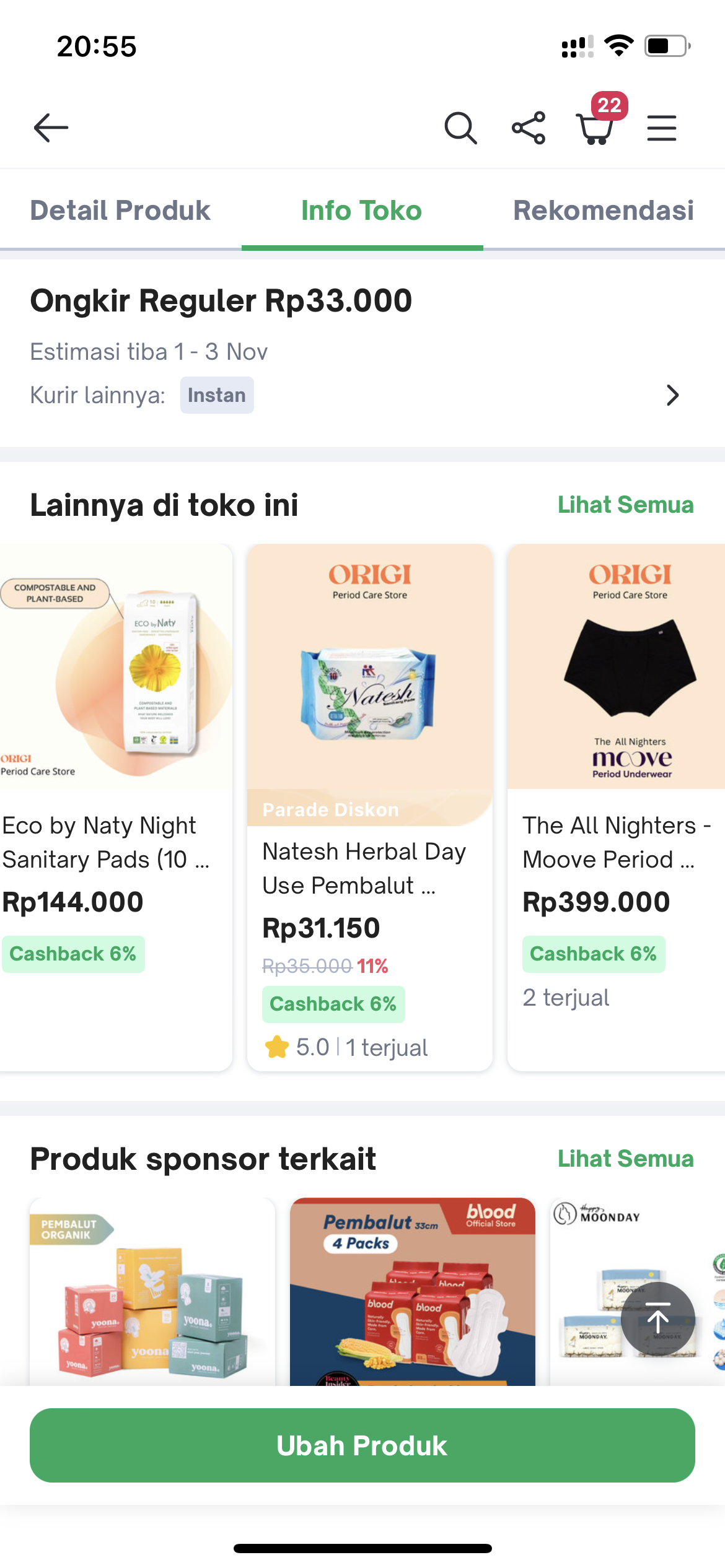
- A marketplace storefront on Tokopedia for reach beyond Bali
The store
Bright, plainspoken, and built to make a purchase easy at 11pm when you've just realised you're out.
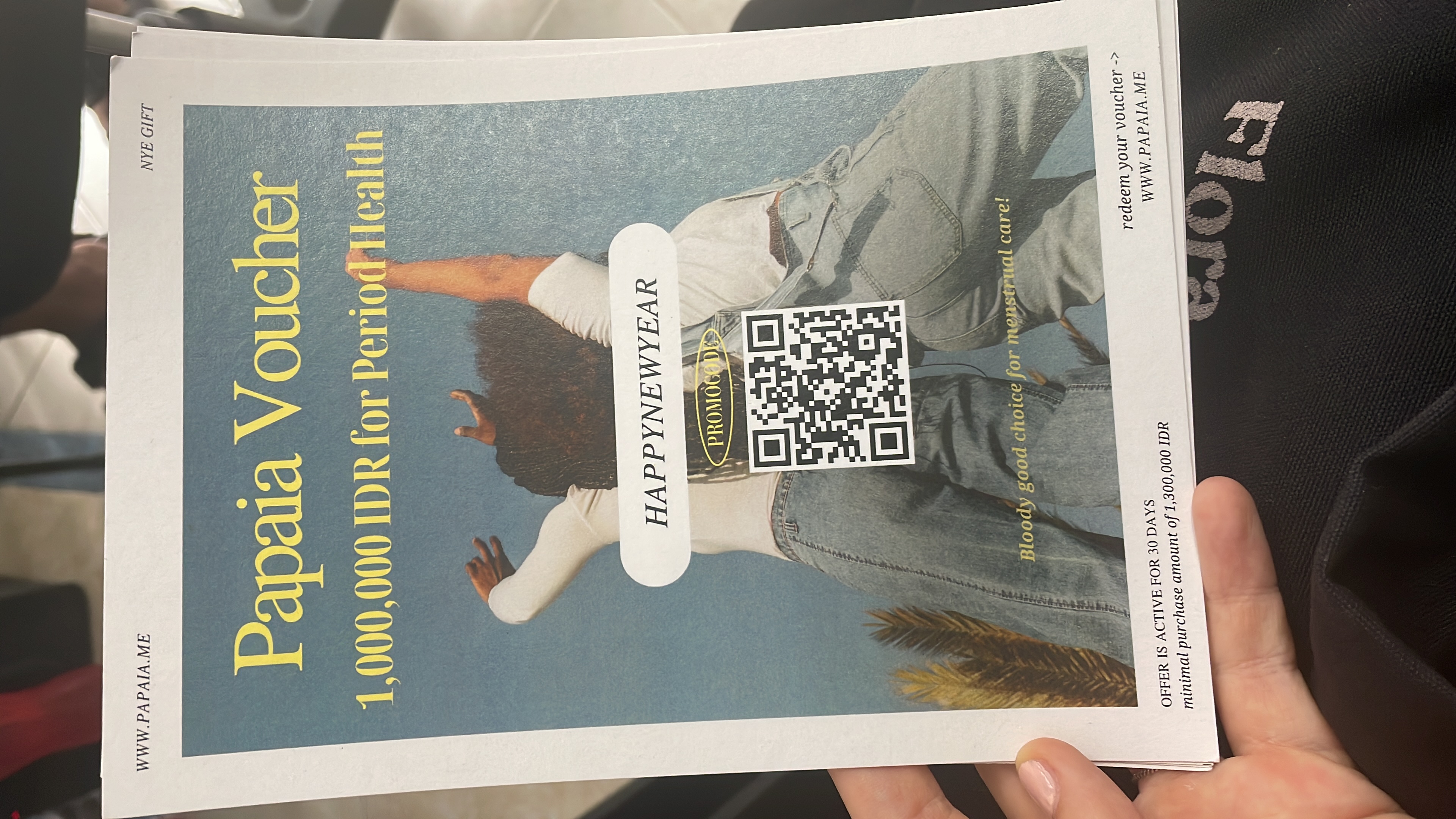
Print, promo, pouch
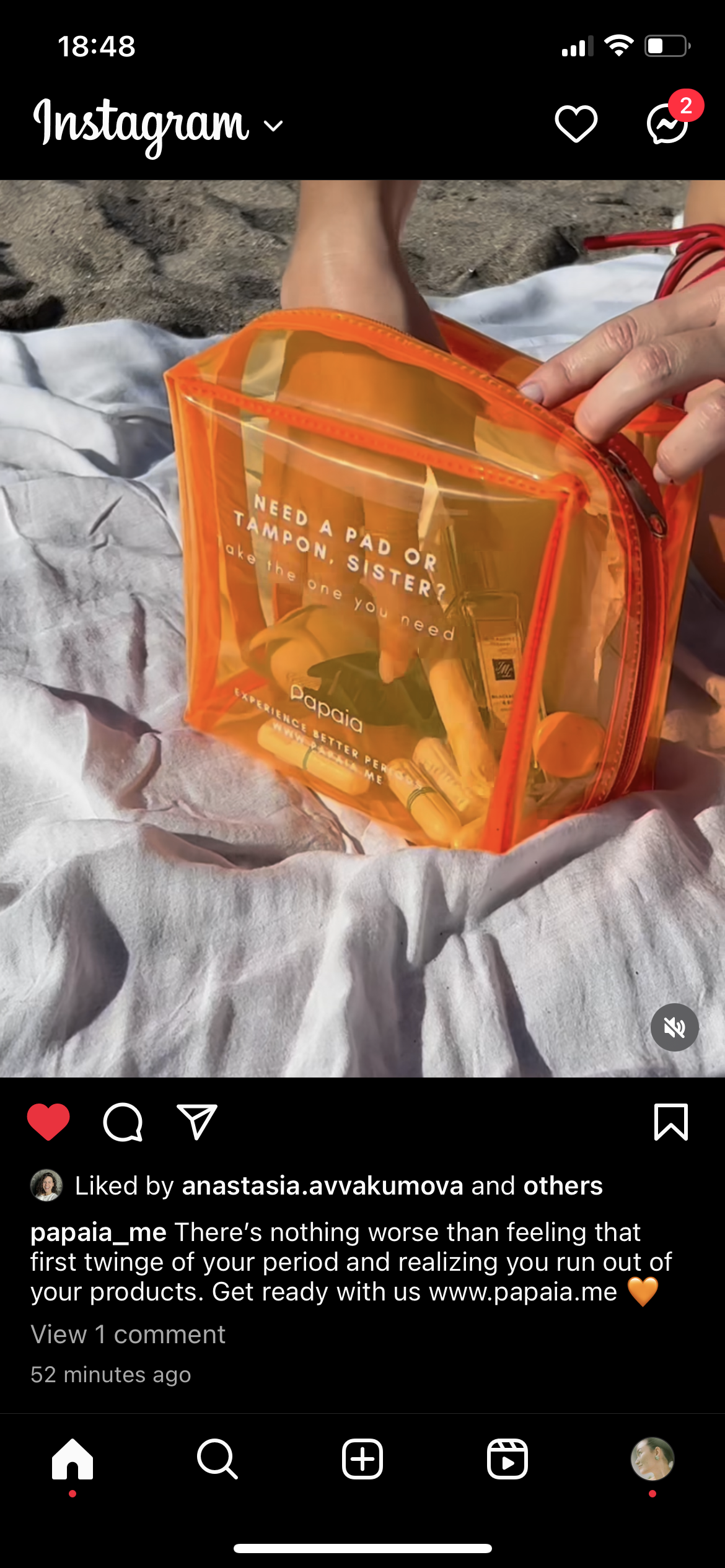
Gift vouchers worth 1,000,000 IDR ran as physical flyers with a QR straight into the store. Payday promos and free-delivery codes carried the online side. The orange pouch — “take the one you need” — went to beaches, cafés and events as the brand's most-shared object.
Voucher · promo code · community pouch
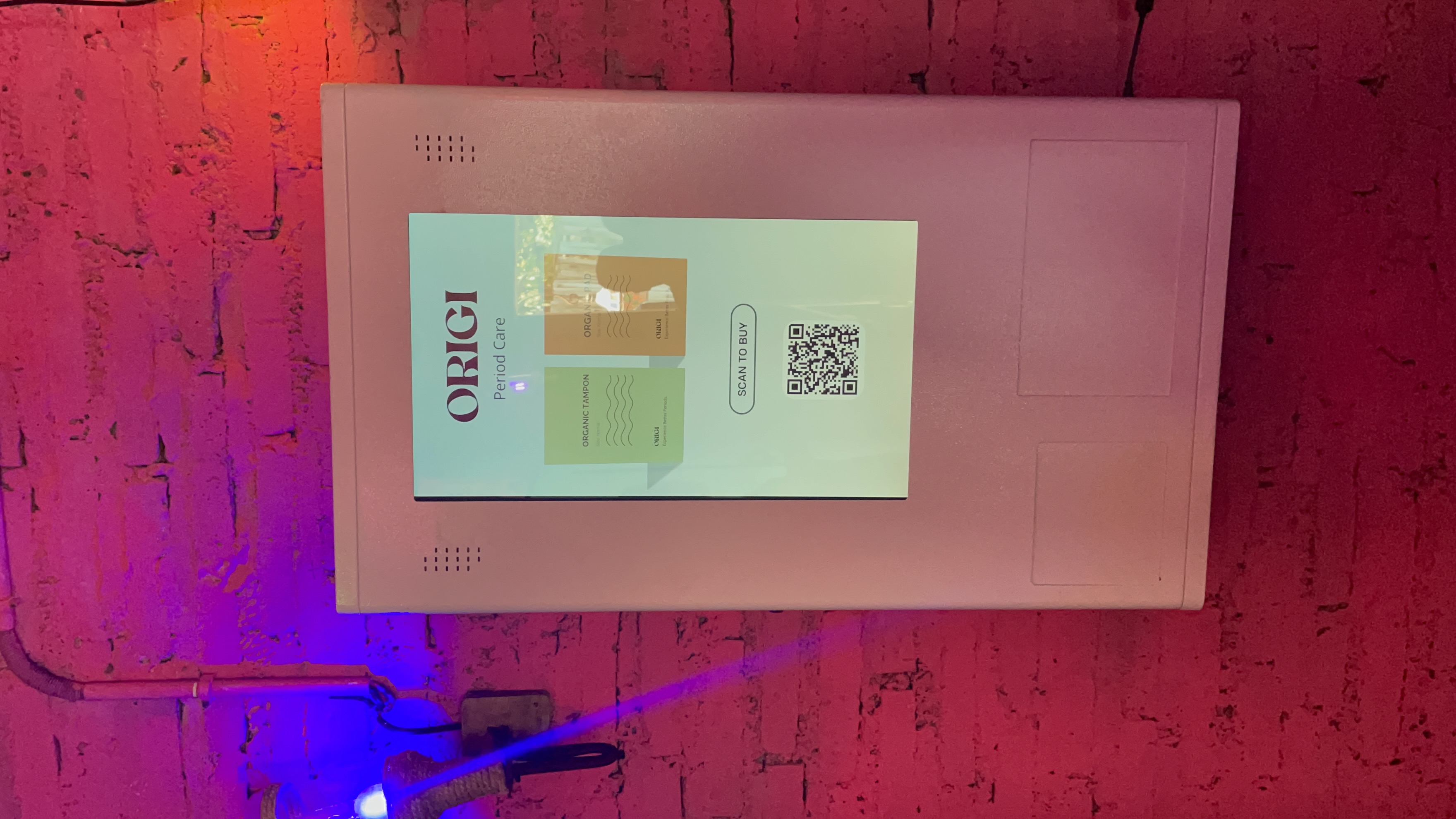
Off the phone, onto the wall
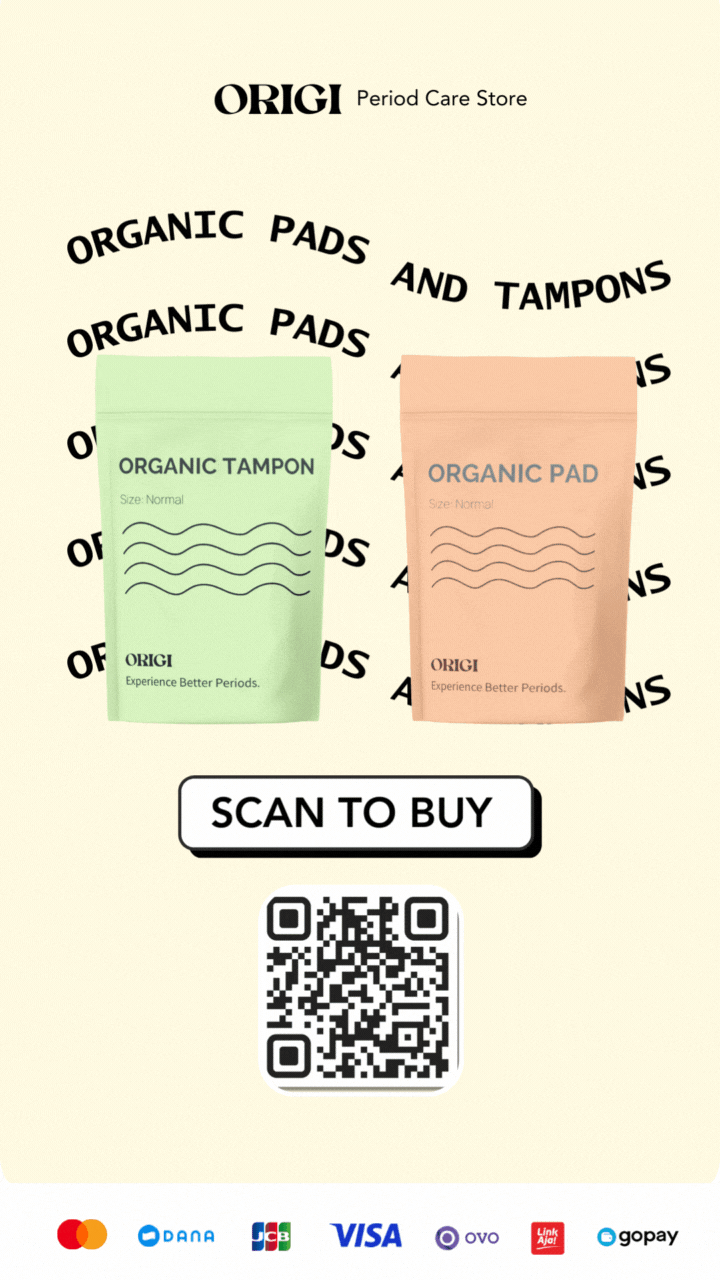
Under the Origi Care banner the same operation moved into venues: a wall unit stocked with organic pads and tampons, screen-led, scan-to-buy. It put period care exactly where the need actually happens — mid-night-out, not mid-scroll.
Vending · scan to buy · organic range
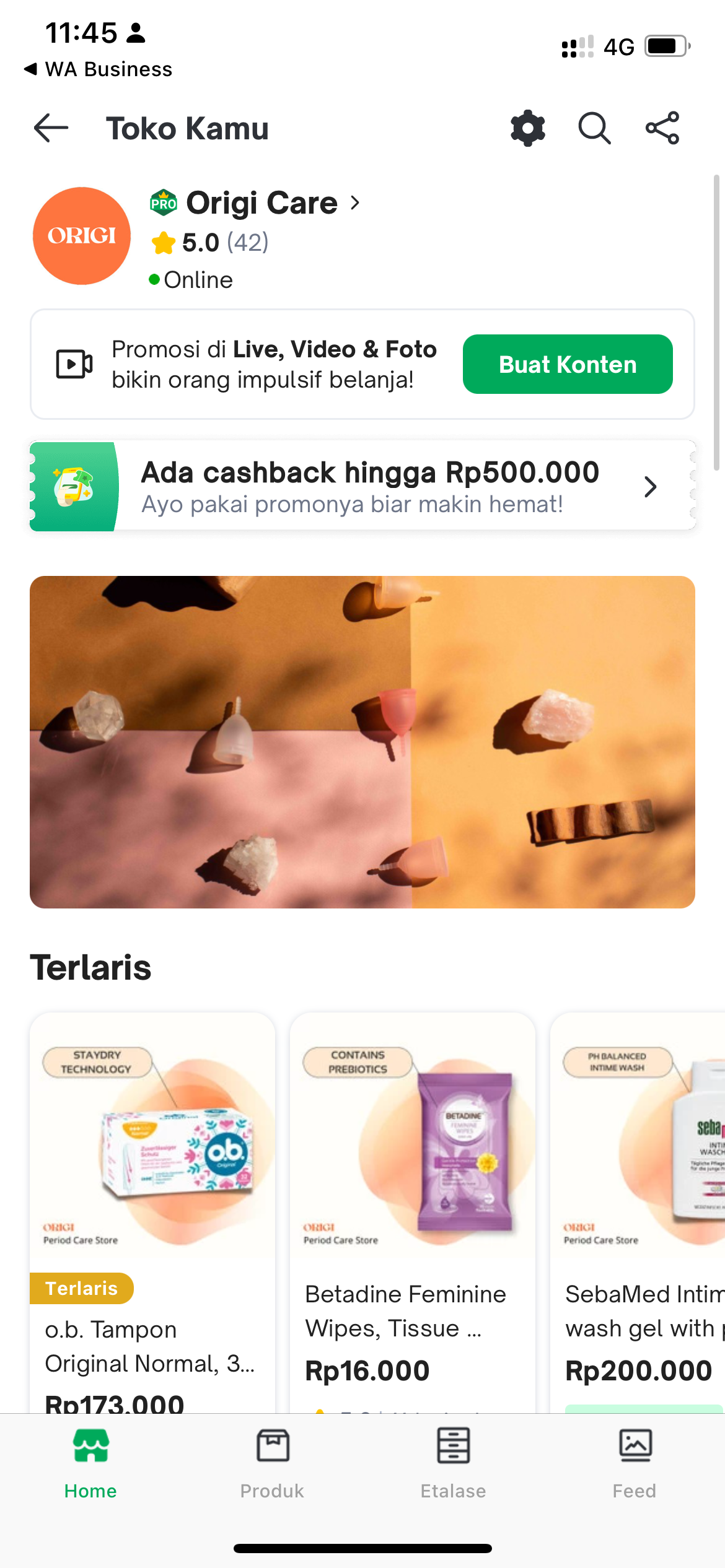
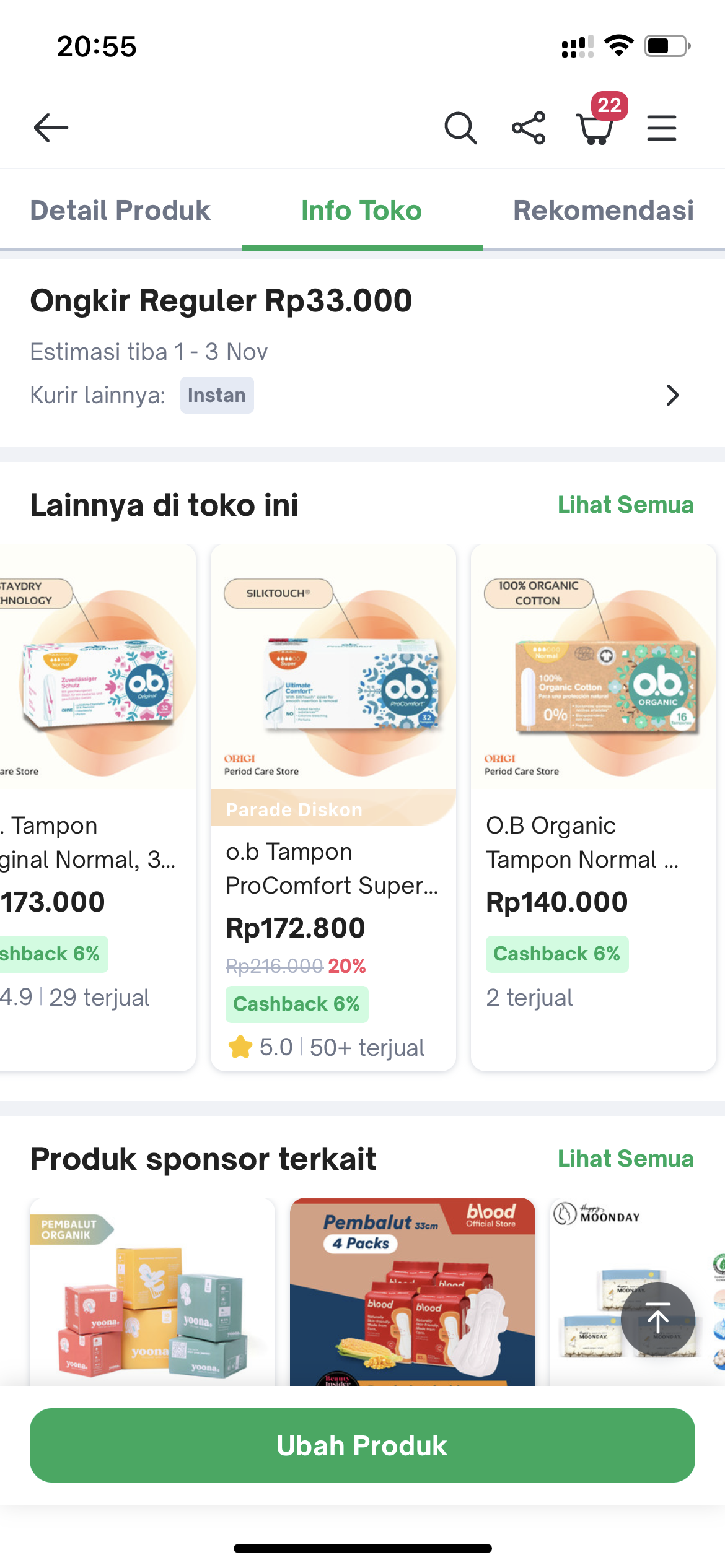
Marketplace
A Tokopedia storefront extended the catalogue past Bali — o.b., Eco by Naty, Betadine, SebaMed, Moove period underwear — rated 5.0 across 42 reviews.
Not only products
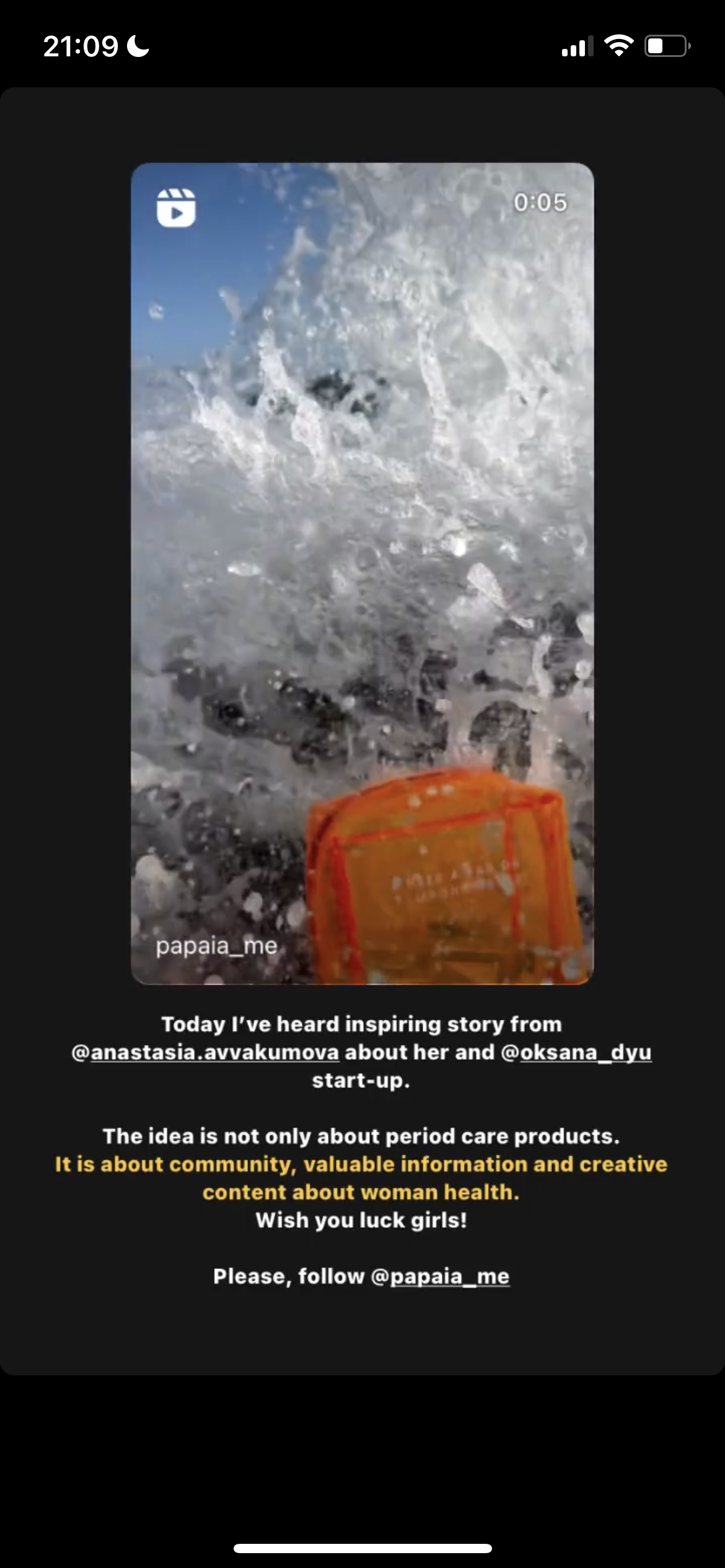
The part that travelled furthest wasn't the catalogue — it was the community. People shared Papaia because it talked about period health plainly, in a place where nobody else was.
What it cost, what it taught
Papaia raised a seed round, built a real customer base, put branded hardware on walls and shipped across Indonesia. It also closed. Import economics on a small island are brutal, and a category people still whisper about is expensive to educate.
Failed, and learned a lot — mostly that distribution, not product, is the whole game.